

Understanding Dry Needling:
A Science-Based Approach to Muscle Pain Relief
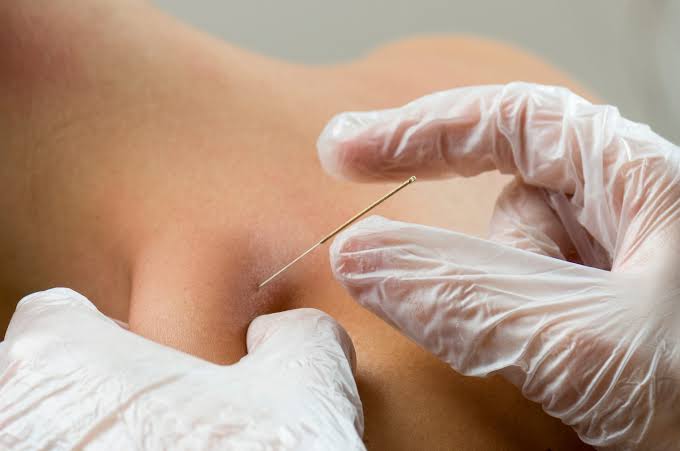
If you are dealing with chronic “knots” or muscle tension that won’t go away, you may have been recommended dry needling. While the idea of needles can be daunting, this evidence-based treatment is a powerful tool in modern physical therapy for managing musculoskeletal pain and improving physical performance.
What is Dry Needling?
Dry needling is a clinical intervention that involves the insertion of thin, solid monofilament needles—the same type used in acupuncture—into the skin and muscle tissue.
The term “dry” is used because no medication, anesthetic, or fluid is injected through the needle (Funk & Frisina-Deyo, 2020). Unlike “wet needling,” which uses hollow needles to deliver substances like corticosteroids, dry needling relies entirely on the mechanical stimulation of the tissue to trigger the body’s natural healing and pain-relief responses (Dunning et al., 2013).
How Does It Work?
The primary target of dry needling is the myofascial trigger point. These are hyperirritable “taut bands” within a muscle that are often tender to the touch and can cause pain to radiate to other areas (Kalichman & Vulfsons, 2010).
The Mechanism of Action
When a needle enters a trigger point, it triggers several physiological reactions:
- The Local Twitch Response: This is an involuntary reflex where the muscle fibers contract and then immediately release (Pourahmadi et al., 2019). Eliciting an LTR is often considered a sign that the trigger point is being successfully deactivated (Pourahmadi et al., 2019).
- Biochemical Normalization: Research indicates that needling can change the chemistry of the muscle by reducing the concentration of inflammatory chemicals and improving oxygenation to the area (Pourahmadi et al., 2019).
- Pain Modulation: The procedure stimulates the nervous system to activate the “gate control” mechanism and release natural pain-killing chemicals (endogenous opioids), which helps dampen pain signals sent to the brain (Pourahmadi et al., 2019).
Dry Needling vs. Acupuncture
Though they use identical tools, the philosophies behind these treatments are distinct:
- Acupuncture is rooted in Traditional Chinese Medicine, focusing on the flow of energy along specific meridians (Funk & Frisina-Deyo, 2020).
- Dry Needling is based on Western biomedical principles, human anatomy, and neurophysiology. It focuses on treating specific anatomical structures like muscles, nerves, and connective tissues to improve function (Funk & Frisina-Deyo, 2020).
Benefits of the Procedure
Dry needling is widely utilized because of its ability to provide significant clinical results, including:
- Rapid Pain Reduction: Many patients experience immediate or short-term relief from chronic pain and disability (Dunning et al., 2013).
- Increased Range of Motion: By releasing muscle tension, it allows for greater flexibility and better movement patterns (Pourahmadi et al., 2019).
- Enhanced Recovery: It can help “reset” muscle firing patterns, which is particularly beneficial for athletes recovering from injury (Pourahmadi et al., 2019).
Safety and Risk Management
Dry needling is considered a very safe and minimally invasive procedure when performed by a qualified professional (Kalichman & Vulfsons, 2010).
Common Side Effects
Most side effects are minor and temporary, including:
- Muscle Soreness: Feeling “stiff” or sore for 24–48 hours, similar to a post-workout feeling (Kalichman & Vulfsons, 2010).
- Minor Bruising: Small marks at the needle insertion site.
Ensuring Your Safety
While serious complications are extremely rare, clinical safety is a top priority. One rare but documented risk is a pneumothorax (a collapsed lung), which can occur if a needle is inserted too deeply in the chest or upper back area (Cummings et al., 2014).
To keep you safe, practitioners use specific protocols:
- Bony Landmarking: Clinicians identify your ribs or other bones to use as a “stop,” ensuring the needle cannot reach deeper organs (Cummings et al., 2014).
- Safety Angles: Needles are often placed at an angle rather than straight down to maintain a safe distance from sensitive areas (Cummings et al., 2014).
- Individualized Care: Practitioners adjust their technique based on your body composition, as individuals with lower muscle mass or a low BMI require different needle depths for safety (Valdes, 2019).
As a standard precaution, patients are simply asked to report any unusual shortness of breath or sharp chest pain following a session, which ensures any issues can be addressed immediately (Arora et al., 2024; Patel et al., 2019).
Conclusion
Dry needling is a highly effective, science-backed method for treating deep-seated muscle pain. By combining precise anatomical targeting with the body’s own healing mechanisms, it provides a unique path to recovery for those who haven’t found relief through traditional massage or stretching.
References
- (“Dry Needling: A Literature Review with Implications for Clinical Practice Guidelines,” 2013)** Dunning, J., et al.** Dry needling: a literature review with implications for clinical practice guidelines. Journal of Manual & Manipulative Therapy.
- (Funk & Frisina-Deyo, 2020)** Funk, M. F., & Frisina-Deyo, A. J.** Dry needling for spine related disorders: a scoping review. Chiropractic & Manual Therapies.
- (Pourahmadi et al., 2019)** Pourahmadi, M., et al.** Effectiveness of dry needling for improving pain and disability… Systematic Review Protocol.
- (Kalichman & Vulfsons, 2010)** Kalichman, L., & Vulfsons, S.** Dry Needling in the Management of Musculoskeletal Pain. The Journal of the American Board of Family Medicine.
- (Dunning et al., 2013)** Dunning, J., et al.** Dry needling: a literature review….
- (Cummings et al., 2014)** Cummings, M., et al.** Pneumothorax Complication of Deep Dry Needling Demonstration. Acupuncture in Medicine.
- (Patel et al., 2019)** Patel, N., et al.** Dry Needling–Induced Pneumothorax. The Journal of the American Osteopathic Association.
- (Arora et al., 2024)** Arora, A., et al.** Unnecessary Needling: A Case of Iatrogenic Pneumothorax Following Dry Needling. Cureus.
- (Valdes, 2019)** Valdes, V.** Dry Needling in Physical Therapy Practice: Adverse Events. Journal of Student Physical Therapy Research.